
If you grew up eating pork chops that were tough and gray, you’re not alone — and it wasn’t your family’s fault. For decades the official advice was to cook pork to 160°F. In 2011 the USDA lowered the safe temperature for whole cuts to 145°F with a 3-minute rest. That change is the difference between dry pork and juicy, tender pork with a hint of pink in the center.
This guide covers every cut in our Blue Ribbon Pork Package: boneless and bone-in chops, tenderloin, loin roasts, baby back ribs and breakfast sausage.
The two numbers to remember
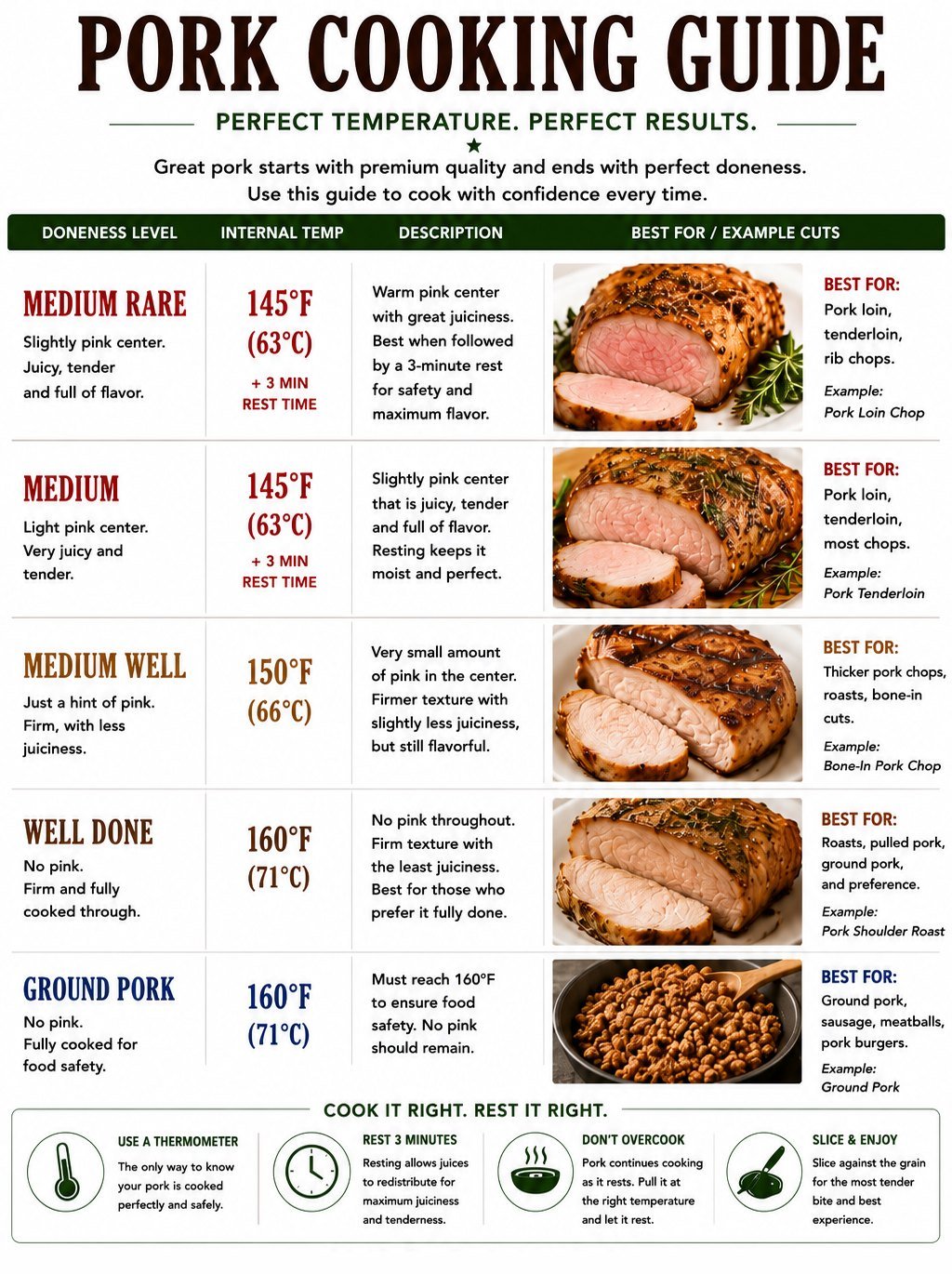
- 145°F, then rest 3 minutes — chops, tenderloin and roasts. A little pink in the center is perfectly safe.
- 160°F — ground pork, including sausage.
Pork keeps cooking after it comes off the heat, so take it off as soon as the thickest part reaches 145°F and let it rest. Use an instant-read thermometer; slide it in from the side so the tip sits in the center, away from any bone.
Pork chops (boneless and bone-in)
- Thaw in the refrigerator the day before (here’s our thawing guide). Pat dry and season generously with salt and pepper.
- Heat a heavy skillet or grill to medium-high. Add a little oil to the pan.
- Sear without moving the chops for a few minutes until a golden crust forms, then flip. Most chops take about 3–5 minutes per side, depending on thickness.
- For thick bone-in chops, finish over lower heat or in a 400°F oven until they reach 145°F.
- Rest 3 minutes before serving.
Tip: want extra-juicy chops? Season them with salt an hour ahead and keep them uncovered in the fridge. The salt seasons the meat all the way through and helps it hold on to moisture.
Pork tenderloin
Tenderloin is the leanest, most tender cut of pork — and it’s fast. Sear it on all sides in a hot oven-safe skillet, then transfer the pan to a 400–425°F oven and roast until the center reaches 145°F, usually about 15–25 minutes depending on size. Rest, then slice into medallions. It pairs well with apples, mustard sauces, or a simple garlic-and-herb rub.
Loin roasts
A loin roast is an easy Sunday dinner that feeds a crowd. Season it the night before if you can. Roast at 350°F — about 20 minutes per pound is a common starting point — and begin checking the temperature well before you expect it to be done. Pull it at 145°F, tent loosely with foil and rest 10–15 minutes before slicing so the juices settle.
Baby back ribs
Ribs are the exception to the “don’t overcook it” rule. They’re safe at 145°F, but they need long, gentle heat to turn tender. Season the racks, then cook low and slow — around 275°F in the oven or on a smoker for a few hours — until the meat pulls back from the bones and bends easily when you lift the rack. Brush with barbecue sauce at the end and finish over a hot grill or under the broiler to caramelize.
Breakfast sausage
Cook sausage over medium heat, turning often so it browns evenly without burning on the outside before the middle is done. Ground pork needs to reach 160°F. Sausage has the shortest freezer life in the package — about 1–2 months for best quality — so plan to enjoy it first (our freezer guide explains why).
Common mistakes (and easy fixes)
- Tough, dry chops: cooked to the old 160°F standard. Pull them at 145°F and rest.
- No crust: the meat was wet or the pan wasn’t hot enough. Pat dry and preheat the pan.
- Tough ribs: cooked too hot and too fast. Low heat and time are what make them tender.
- Slicing right away: let roasts and chops rest so the juices stay in the meat.
Storing and leftovers
- After thawing, cook chops and roasts within 3–5 days and sausage within 1–2 days.
- Frozen chops and roasts keep their best quality for 4–12 months.
- Refrigerate cooked pork within 2 hours and eat it within 3–4 days. Leftover roast makes great sandwiches, fried rice or tacos.
- Reheat leftovers to 165°F.
Safe minimum temperatures and storage times: FoodSafety.gov; USDA revised its pork recommendation to 145°F with a 3-minute rest in May 2011. Cooking times are approximate — always confirm with a thermometer.


Leave a Reply