

Chicken breast has a reputation for being dry and boring. It doesn’t deserve it. Almost every dry chicken breast comes down to one thing: it was cooked past the point of done. Get the temperature right and chicken is one of the easiest, most versatile dinners in your freezer.
This guide covers everything in our chicken package — the pre-marinated breasts (lemon pepper, Southwestern, fajita and garlic & herb), the plain breasts and the tenders — with methods that work on a weeknight.
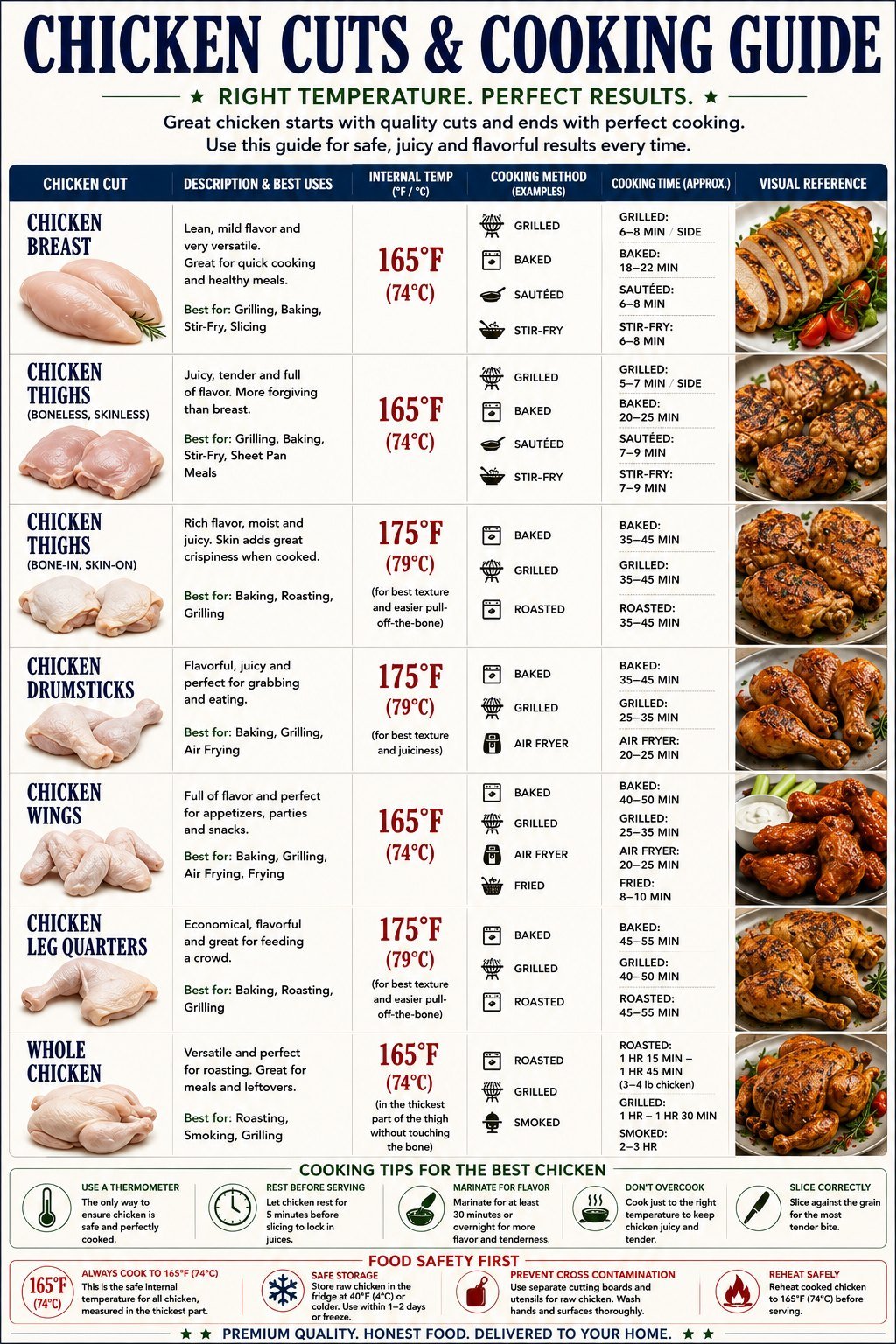
The only number you need: 165°F
All chicken is safe when the thickest part reaches 165°F. That’s the USDA’s safe minimum for every kind of poultry, and it’s also the secret to juicy chicken: once you hit 165°F, take it off the heat. Every degree past that squeezes out moisture.
An instant-read thermometer is the best $15 you’ll spend in the kitchen. Slide it into the side of the breast so the tip sits in the center of the thickest part. Color and “clear juices” aren’t reliable — a marinated breast can look done on the outside long before the middle is.
Before you cook
- Thaw in the refrigerator the day before. In a hurry? Keep it sealed and submerge it in cold water, changing the water every 30 minutes — about an hour per pound. (More in our thawing guide.)
- Don’t rinse raw chicken. The USDA advises against it: rinsing doesn’t remove bacteria, it splashes them around your sink and counters.
- Pat it dry. A dry surface browns; a wet one steams.
- Even it out. If one end of a breast is much thicker than the other, place it in a zip-top bag and gently pound the thick end with a rolling pin. Even thickness means even cooking — no dry edges waiting on a raw center.
- Let it sit 15 minutes while the grill or oven heats. Taking the chill off helps it cook more evenly.
Three reliable ways to cook it
On the grill
Heat the grill to medium-high and oil the grates. Cook breasts about 6–8 minutes per side, turning once, then start checking the temperature. The marinated breasts have seasoning and sometimes a little sugar on the surface, so they brown faster — if they’re darkening before they’re done, move them to a cooler part of the grill to finish.
In the oven
The most hands-off method. Heat the oven to 400–425°F, place the breasts on a lined sheet pan with a little space between them, and bake about 18–22 minutes, depending on thickness. For sheet-pan dinners, add sliced peppers, onions, broccoli or potatoes around the chicken.
In a skillet
Heat a tablespoon of oil in a heavy skillet over medium-high heat. Lay the breasts in and leave them alone for a few minutes to build a golden crust, then flip. If the outside is done before the inside, lower the heat and cover the pan for a few minutes. Thin cutlets or sliced chicken for stir-fry cook in about 6–8 minutes total.
Tenders
Tenders are thinner and cook in a fraction of the time — start checking after just a few minutes per side. They’re ideal for kids, wraps, salads and quick lunches.
Rest, then slice
Give chicken 5 minutes on a cutting board before slicing. The juices settle back into the meat instead of running onto the board. Slice across the grain for the most tender bite.
Dinner ideas for every marinade
- Lemon pepper: sliced over a Caesar or Greek salad, or with rice and roasted green beans.
- Southwestern: burrito bowls with rice, black beans, corn and salsa — or chopped into quesadillas.
- Fajita: sheet-pan fajitas with sliced peppers and onions, served in warm tortillas.
- Garlic & herb: sliced over pasta with olive oil and parmesan, or with mashed potatoes.
- Plain: your blank canvas — season it your way, use it for stir-fry, or cook a batch for the week’s lunches.
- Tenders: wraps, chicken salad, or an easy dinner the kids will actually eat.
Common mistakes (and easy fixes)
- Dry chicken: cooked too long. Use a thermometer and pull it at 165°F.
- Burnt outside, raw inside: heat too high for the thickness. Pound to an even thickness, or finish over lower heat or in the oven.
- Pale and rubbery: the surface was wet or the pan was crowded. Pat dry and give each piece space.
- Cutting it open to check: lets the juices escape. A thermometer tells you without the damage.
Storing and reheating
- Raw chicken keeps 1–2 days in the refrigerator after thawing. Frozen chicken pieces keep their best quality for about 9 months (see our freezer guide).
- Refrigerate leftovers within 2 hours of cooking and eat them within 3–4 days.
- Reheat leftovers to 165°F. For sliced chicken, a covered skillet with a splash of broth keeps it moist.
- Keep raw chicken separate: use a different cutting board than for produce, and wash hands, boards and knives with hot, soapy water after handling.
Safe minimum temperatures and storage times: FoodSafety.gov. Cooking times are approximate — always confirm with a thermometer.


Leave a Reply