
A steakhouse-quality steak at home doesn’t take special equipment or secret techniques. It comes down to three things: a hot grill or pan, a thermometer, and a few minutes of patience at the end. Get those right and every steak in your freezer turns into a dinner worth sitting down for.
This guide covers the steaks in our Premium Steaks Package and All Natural Beef Package — how hot to cook them, how long, and how to tell when they’re done.
Doneness is a temperature, not a guess
Pressing a steak with your finger or cutting it open to peek are the two most common ways to ruin one. An instant-read thermometer takes the guesswork out: slide it in from the side so the tip sits in the center of the thickest part, away from any bone.
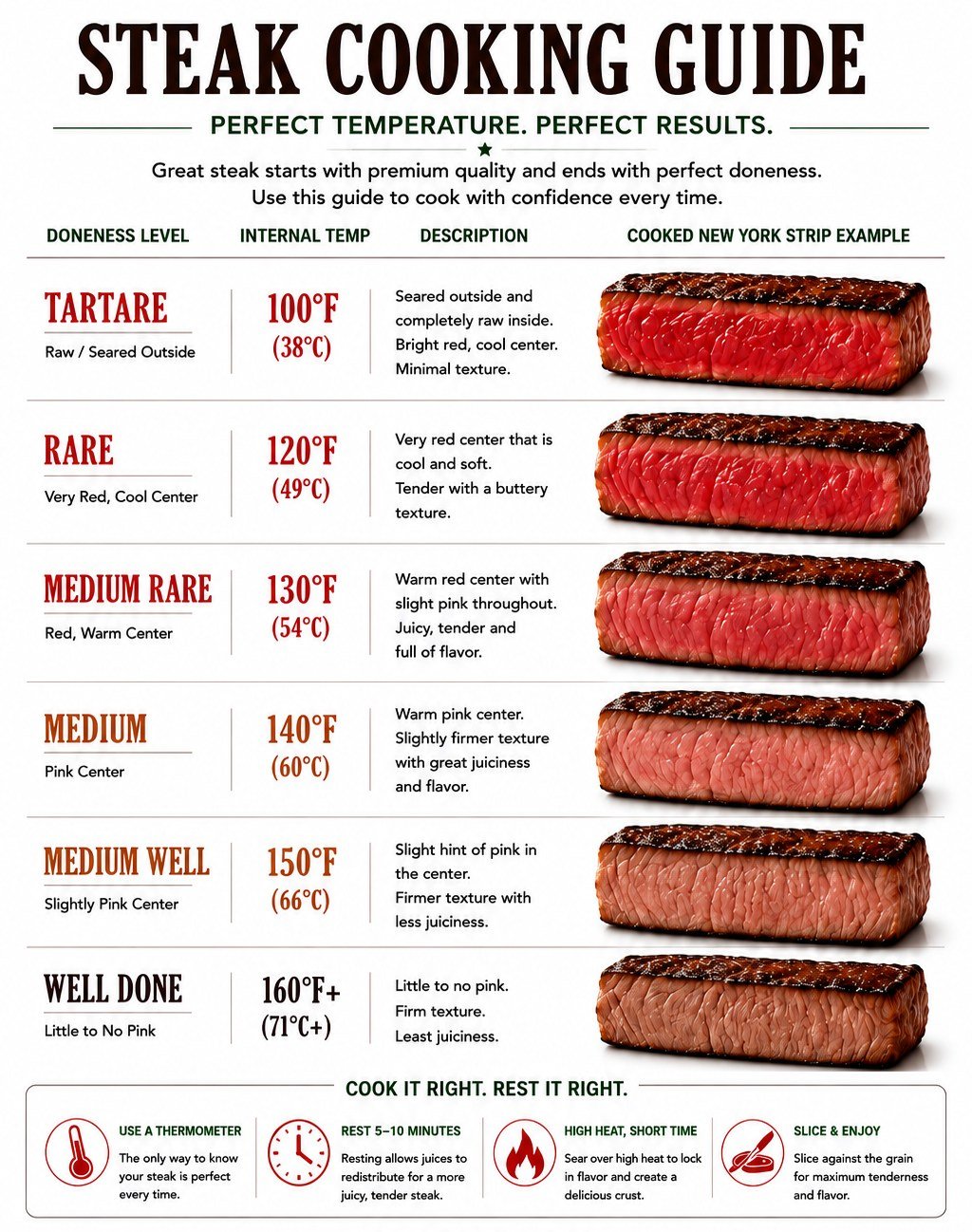
Use the chart as your target for the finished steak. Steak keeps cooking after it leaves the heat — usually another 5°F or so — so pull it off a few degrees early and let the rest carry it the rest of the way.
The USDA’s safe minimum for whole beef steaks is 145°F followed by a 3-minute rest, which lands at about medium. Rarer doneness is a personal choice many steak lovers make; ground beef is different and should always reach 160°F.
Before you cook
- Thaw in the refrigerator the day before. Steaks thaw evenly that way and stay at a safe temperature the whole time. In a hurry? Keep them sealed and submerge them in cold water, changing the water every 30 minutes. (More in our thawing guide.)
- Pat them dry. Moisture on the surface steams instead of searing. A dry steak builds a deep brown crust.
- Season generously. Coarse salt and black pepper on both sides is all a great steak needs. Salt right before cooking, or up to a day ahead, uncovered in the fridge, for an even better crust.
- Let them sit 20–30 minutes while the grill heats. Taking the chill off helps the center cook evenly with the outside.
How to grill a steak, step by step
- Set up two heat zones. On a gas grill, turn one side to high and the other to low. On charcoal, pile the coals to one side. The hot side sears; the cooler side finishes thick cuts without burning them.
- Get it hot. Preheat with the lid closed for 10–15 minutes, then clean and oil the grates.
- Sear. Lay the steaks on the hot side and leave them alone for 2–4 minutes until they release easily with a crust. Flip once and sear the other side.
- Finish. Thinner steaks (about an inch) are often done after the sear. Move thicker steaks to the cooler side, close the lid, and check the temperature every couple of minutes.
- Pull it early. Take steaks off about 5°F below your target from the chart.
- Rest 5–10 minutes, then slice across the grain.
No grill? Use a skillet
A heavy cast-iron or stainless skillet makes a steak every bit as good as the grill. Heat it over medium-high until it’s smoking lightly, add a thin film of high-heat oil, and sear the steaks 2–4 minutes per side. For thick cuts, finish in a 400°F oven until they reach temperature. In the last minute, add a knob of butter, a crushed garlic clove and a sprig of rosemary or thyme, tilt the pan and spoon the foaming butter over the steak.
Tips by cut
New York strip and ribeye
The classic grilling steaks. Ribeyes carry more marbling, so they stay juicy and forgiving; strips are a little leaner with a firm, beefy bite. Sear hard on both sides and finish over lower heat if they’re thick. Medium-rare to medium shows them off best. Watch for flare-ups from ribeye fat — move the steak to the cooler side if flames jump.
Filet mignon (tenderloin)
The most tender cut, and also the leanest, so it’s the easiest to overcook. Sear on all sides, then finish gently over lower heat. Filets are at their best between rare and medium. A pat of butter on top while they rest adds richness lean beef doesn’t have on its own.
T-bone and bone-in steaks
A T-bone is two steaks in one: strip on one side of the bone, tenderloin on the other. The tenderloin side cooks faster, so keep it pointed toward the cooler part of the grill. Meat next to the bone cooks more slowly too — check the temperature in the center of each side, away from the bone.
Steak burgers and chopped steak
Ground beef is the one exception to rare: cook patties to 160°F. Press a shallow dimple into the center of each patty before cooking so it stays flat, flip once, and don’t press them with the spatula — that squeezes the juice onto the coals.
Common mistakes (and easy fixes)
- Gray, no crust: the surface was wet or the grill wasn’t hot enough. Pat dry and preheat fully.
- Burnt outside, raw inside: the steak stayed over high heat too long. Sear, then move to the cooler side to finish.
- Overcooked: carryover heat. Pull steaks 5°F early and let them rest.
- Tough and chewy: sliced with the grain. Look for the lines in the meat and cut across them.
- Flipping again and again: one flip builds a better crust. Let the steak release on its own before you turn it.
Storing and leftovers
- After thawing, cook steaks within 3–5 days. Frozen steaks keep their best quality for months (see our freezer guide).
- Refrigerate leftovers within 2 hours and eat them within 3–4 days.
- Reheat gently — a low oven or a covered skillet with a splash of broth — to 165°F. Leftover steak is also excellent cold, sliced thin over a salad or in sandwiches, tacos and fried rice.
Safe minimum temperatures and storage times: FoodSafety.gov. Doneness temperatures are common cooking guidance; cooking times are approximate — always confirm with a thermometer.


Leave a Reply